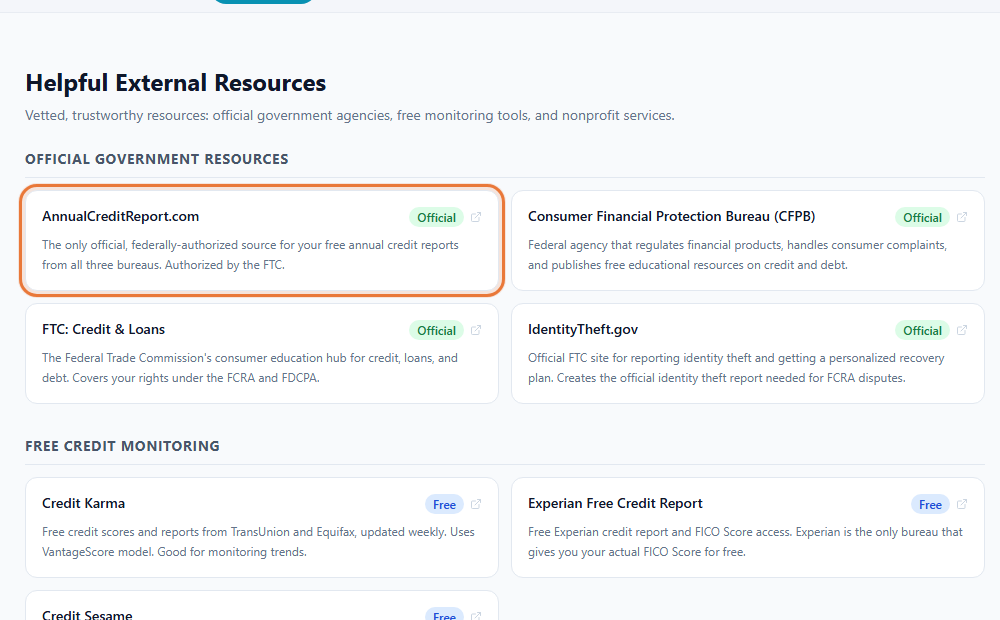
A credit freeze can make it harder for someone to open a new account in your name. It does not close existing accounts, erase report entries, or change your score. The FTC explains the freeze and fraud alert options.
Know what a freeze does
A freeze restricts access to a credit report for most new-credit applications. It can be a useful default even if you have not experienced identity theft. You will need to lift it temporarily when a lender must review your file. A fraud alert is different: it asks a lender to verify your identity more carefully, rather than blocking access.
Freeze your files one by one
 Inside Credit Building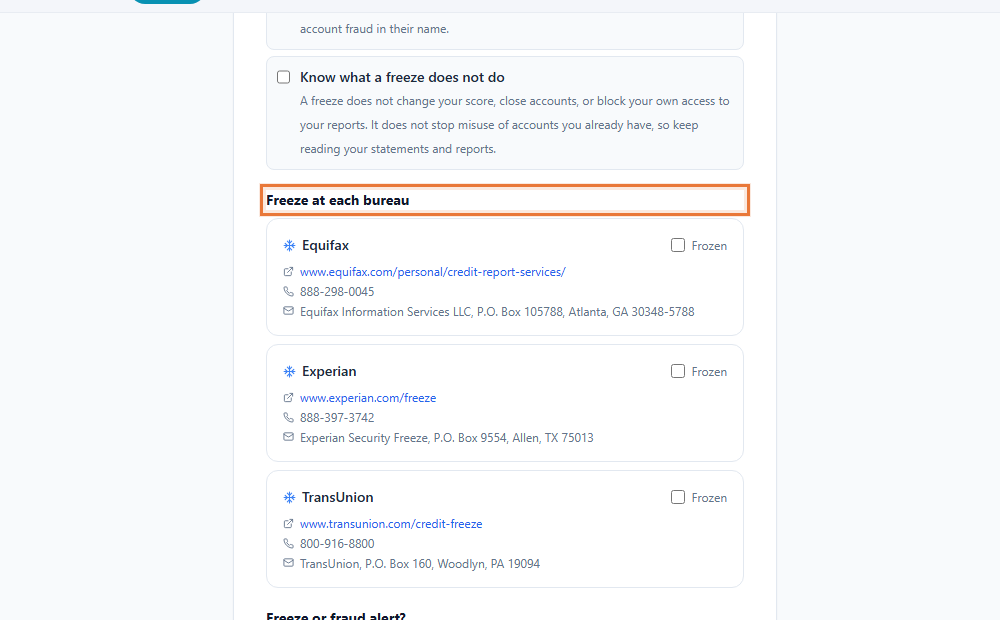
- Open the Credit Freeze Guide. It shows links and contact details for Equifax, Experian, and TransUnion.
- Visit each bureau's official freeze page. A freeze at one bureau does not freeze the other two. Follow each bureau's identity-verification steps directly with that bureau.
- Keep each confirmation. Save the date and any reference number or account details somewhere you can find later.
- Mark the checklist. The tool helps you track which bureaus are complete; the checkmarks stay in this browser.
- Plan a temporary lift before applying. Ask which bureau a lender will check if possible, then lift the relevant freeze for the needed period.
If you suspect identity theft
A freeze is one protective step. If an unfamiliar account appears, check your reports and use IdentityTheft.gov for an official recovery plan. Dispute incorrect entries with the bureau that shows them.
This guide is general education, not legal or financial advice. CreditPath and ToolsToHelp.Me do not promise any change to your credit report or score. For advice about your situation, talk to a qualified professional, such as a nonprofit credit counselor or an attorney.