A mistake on your credit report can lower your score or cost you a loan approval for no real reason. The Fair Credit Reporting Act (FCRA) gives you the right to dispute wrong information, and it requires the credit bureau to investigate. Here is how to do it.
This guide covers finding an error, backing it up, sending the dispute to the right places, and what happens after you send it. It is general education, not legal advice, and it does not promise any particular outcome.
Get your credit reports
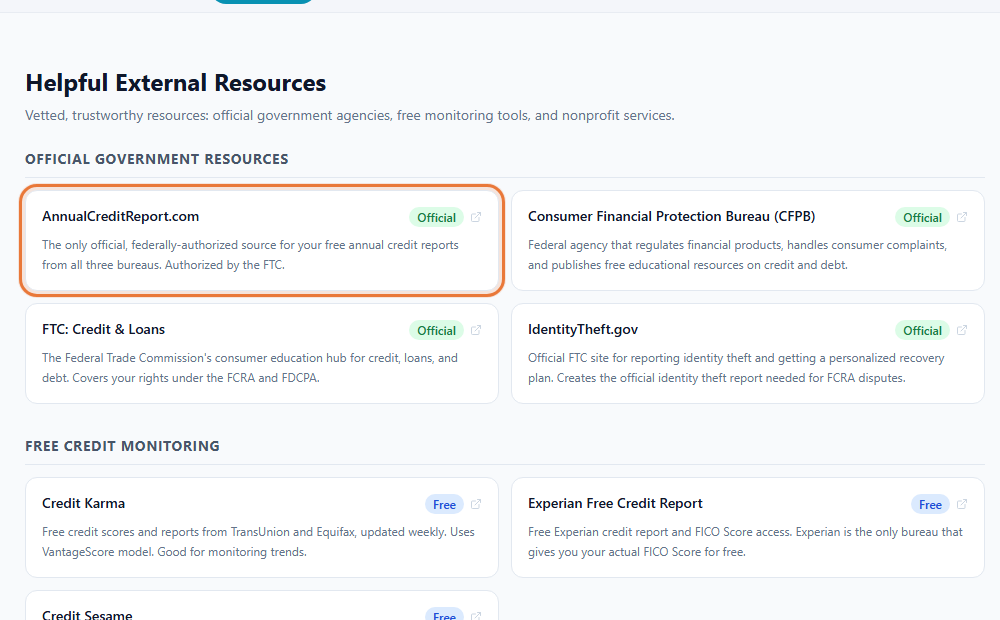
Start by pulling your report from each of the three bureaus, Equifax, Experian and TransUnion, at AnnualCreditReport.com, the official site for your free federal reports. An error on one bureau's report does not necessarily show up on the other two, since each bureau keeps its own file, so check all three. See how to check your credit report for more on reading what is in each one.
Common errors worth disputing
- Wrong personal information. A misspelled name, an address you never lived at, or a Social Security number that does not match.
- Accounts that are not yours. An account you never opened, which can be a sign of identity theft or a mixed file with someone of a similar name.
- Wrong balances or late payment marks. A balance that does not match your own records, or a late payment reported for a month you actually paid on time.
- Duplicate accounts. The same debt listed more than once, sometimes under the original creditor and again under a collection agency.
- Outdated negative items. Most negative information has to come off after a set period under the FCRA. A late payment generally drops off 7 years after the original missed payment, and collections and charge-offs follow a similar window. A Chapter 7 bankruptcy can stay up to 10 years. If a negative item is older than that, it may be outdated rather than wrong.
A dispute works on information that is inaccurate, incomplete or unverifiable. It is not a way to remove a negative item that is correct and still within its reporting period, and a bureau can dismiss a dispute that challenges information you know to be accurate.
Gather your proof
Collect whatever backs up your side: a bank or payment statement, a letter from the creditor, a police report if the account came from identity theft, or your own account records. Send copies, never your only originals.
How to send your dispute
 Inside Credit Building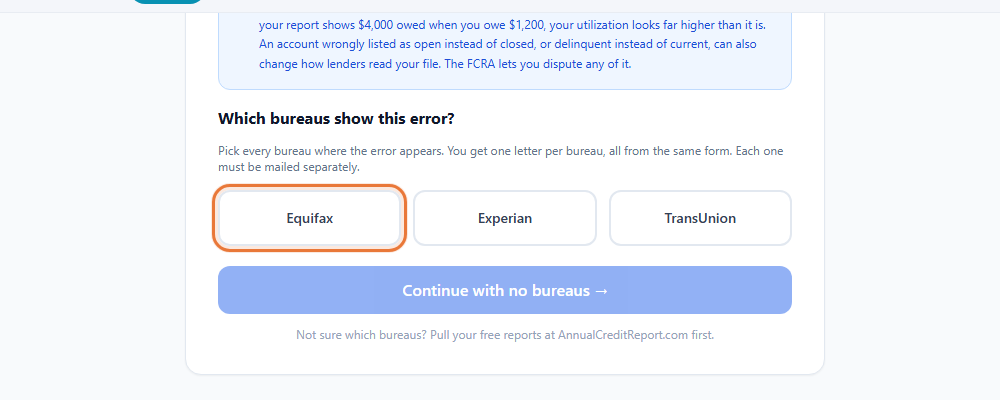
- Identify exactly what is wrong. For each error, write down the account name, the account number if you have it, which bureau's report shows it, and what the correct information should be.
- Write your dispute. Be specific and factual: state what is wrong and what it should say instead. CreditPath's free Dispute Letter Writer can help you put this together clearly.
- Send it to each bureau that shows the error. Equifax, Experian and TransUnion each take disputes online, by mail, or by phone. Mail sent with tracking, such as certified mail with return receipt requested, gives you proof of what you sent and when it arrived.
- Consider disputing with the furnisher too. The furnisher is the original creditor or collector that reported the item. The FCRA lets you dispute with them directly as well as with the bureau.
- Keep copies of everything. Your letter, your proof, and your mailing receipt. You may need them if the item is not fixed the first time.
What happens after you send it
The bureau you dispute with generally has 30 days to investigate, or 45 days if you send more supporting documents during the review. It must send you the written results. If the dispute is resolved in your favor, the bureau corrects or removes the item. If the bureau finds the information accurate, it stays on your report.
If you are not satisfied with the result, you have options. You can ask the bureau to add a short statement of your own to the file, explaining your side. You can also file a complaint with the Consumer Financial Protection Bureau (CFPB), the federal agency that handles complaints about credit reporting. For identity theft specifically, the Federal Trade Commission (FTC) is another resource, including its IdentityTheft.gov reporting tool.
A few things to keep in mind
- Dispute each bureau separately. A correction at Equifax does not carry over to Experian or TransUnion. Send a separate dispute to each one that shows the error.
- Only dispute what you believe is wrong. Disputing accurate information, or disputing everything on a report at once hoping something sticks, can get a dispute dismissed as frivolous.
- No one can promise a result. A dispute may lead to a correction, or the bureau may verify the information as accurate. Be wary of anyone who guarantees a specific outcome for a fee.
- Check your report again after you get the results. Confirm the correction actually appears, and watch for an old item reappearing later. That can happen, and it is worth disputing again if it is not accurate.
This guide is general education, not legal or financial advice. CreditPath and ToolsToHelp.Me do not promise any change to your credit report or score. For advice about your situation, talk to a qualified professional, such as a nonprofit credit counselor or an attorney.