An estimate sets expectations before any work starts. It is not a bill, it is a proposal: what the job will cost if the client says yes. A clear estimate, broken into the same line items your invoice will eventually use, avoids the awkward conversation where a final bill looks nothing like what was discussed.
Estimate example
Here is a filled-in example for a roof replacement. Adjust the scope, materials and labor to match your own job.
office@example.com
License #RF-44210
Salt Lake City, UT
217 Cottonwood Dr
Salt Lake City, UT 84105
TermsDeposit due at approval
| Description | Qty | Rate | Amount |
|---|---|---|---|
| Tear-off and disposal of existing roofing | 1 | $1,200.00 | $1,200.00 |
| Architectural shingles, 30-year (materials) | 1 | $5,800.00 | $5,800.00 |
| Underlayment, flashing and ridge vent (materials) | 1 | $950.00 | $950.00 |
| Installation labor | 1 | $3,200.00 | $3,200.00 |
What to include on an estimate
- Your business name, license number and contact details, the same as you would show on an invoice.
- The client's name and job address.
- A unique estimate number, separate from your invoice number sequence, so the two are easy to tell apart in your records.
- A valid-until date, so the price is not open-ended.
- Line items for materials and labor, matching the detail level of your eventual invoice.
- Conditions that could change the price, such as hidden damage found once work starts, noted plainly.
How to word your line items
Write the estimate as if it were the invoice you plan to send later, since that is the comparison your client will make once the job is done.
- Scope of work: "Tear-off and disposal of existing roofing" describes the task, not just a dollar figure.
- Materials: name the specific product, such as "Architectural shingles, 30-year (materials)", so a client can compare it to another quote.
- Labor: shown as its own line or folded into a project rate, but stated consistently with how you will invoice later.
Terms for estimates and quotes
- A valid-until date, commonly 30 days, after which you may need to requote if material costs have moved.
- A deposit due at approval, so signing the estimate also starts the payment process.
- A note on conditions, such as unforeseen repairs, that could change the final price once work is underway.
Estimate vs quote vs invoice explains how these documents differ and when to use each one.
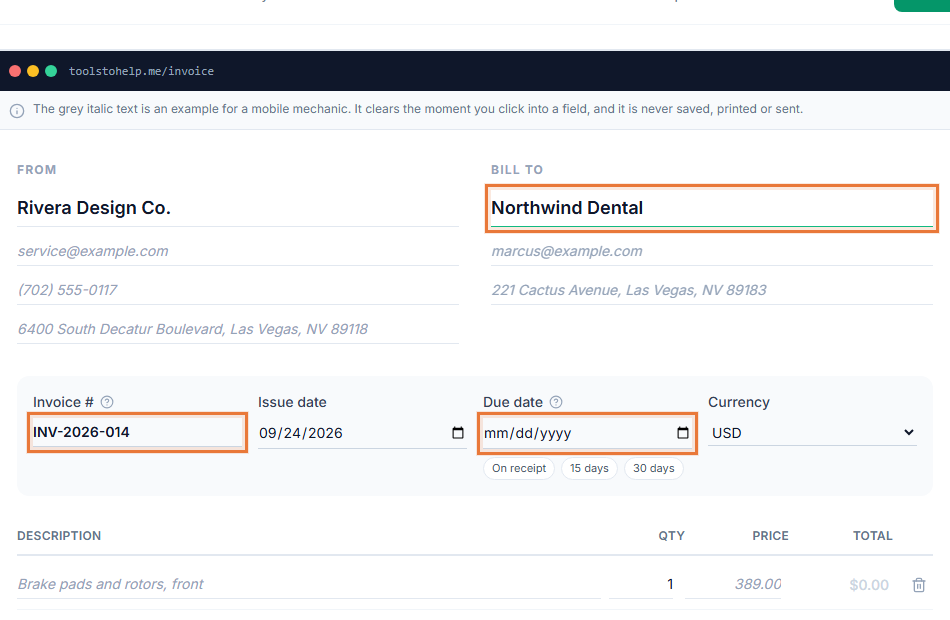
Making the estimate with the Invoice Generator
- Open the Invoice Generator and start a document with your job's materials and labor.
- Add your line items and a valid-until date so the client knows the price has a window.
- Create a free account to save it. Your work is kept while you sign up, and your logo appears on the document.
- Share the link with your client. They can review it and sign in the browser without an account, and you can see when they have viewed it.
Once the client approves, convert the agreed line items into an invoice and request your deposit.